
Enhance your whole enterprise using a complimentary CRM system.
Customers can receive service responses from AI agents, while the most challenging tasks can be handed over to human representatives, who then utilize AI to suggest solutions, create responses, and furnish call notes. By providing representatives with straightforward access to comprehensive customer histories (CRM systems enhance customer service), facilitating quicker issue resolution and enabling communication across various channels. A clear 360-degree perspective of the sales pipeline (along with the automation of lead management and tasks like data entry and follow-ups), is driven by CRMs to boost sales. Getting started is simple, regardless of whether you run a small business or a large enterprise. While customer service is already aware of a customer’s history when they inquire about questions, commerce teams can present tailored offers on your website.
Use HubSpot’s AI-powered assistant to research companies — prep for sales calls, summarize CRM records, and more. Control user permissions for CRM records (content), and tools so each user has access to the right assets. Visualize your entire sales cycle — assign tasks, and predict future revenue based on how likely deals and clients will close. Keep track of all the to-do’s and activities that help you build customer and client relationships — right inside your CRM. Create contacts, keep records up to date, log sales activities, and view communication history, all in one place. When you’re ready for more — upgrade to get premium CRM functionality that builds on what you already have.
000+ customers in over 135 countries grow their businesses with HubSpot.
Then build out your deal stages and create pipelines that match how your team already works, not some idealized sales funnel. Most CRMs hula-project.com support CSV imports and offer basic deduplication, but it’s worth doing a pre-clean. Don’t spring it on your team like a surprise inspection. Even the best CRM won’t help if it’s just another tab no one uses. Watch out for “upgrade traps” where must-have features (like workflow automation or API access) only unlock in higher tiers. Look for drag-and-drop builders that let you automate tasks (handoffs), and customer journeys in a few clicks.
User management
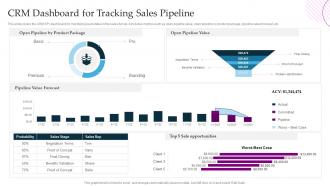
There’s no costly hardware to maintain — and software management is straightforward for IT teams with no version control concerns or updates to schedule. AI agents can serve as an extension of your team, using CRM data to take action throughout the customer journey. Using AI can give you unprecedented insights into how people feel and what they are saying about your organization. Your service representatives can quickly access a customer’s record of all past interactions so they can provide quick, informed answers and service. Plus, fully integrated productivity platforms such as Slack provide a single place where employees can collaborate right in the flow of work and automate processes.
The CRM can even offer suggestions for new products the customer may like based on trends and insights uncovered by AI. AI CRMs also enable employees to make more accurate predictions in forecasts like quarterly sales targets, ecommerce sales, or the best time to send a marketing email. Digital labor takes productivity to the next level by responding to service inquiries, scheduling follow-ups, or generating custom CRM reports. This can boost employee productivity, especially when using AI agents that can take action autonomously based on your instructions and assigned guardrails. This allows you to quickly gain insights about a customer to personalize every interaction. CRM software provides visibility into every opportunity or lead, showing you a clear path from inquiries to sales.
The best ones help you sell more (serve better), and scale without hiring five new people to stay on top of it all. A CRM is your system of record — your follow-up assistant, and your sales coach all rolled into one. These CRM tools unify data, reduce tool switching, and ensure every team works from the same source of truth.
- Establish a unified source of truth for your marketing, sales, and customer service data, which can be accessed by your entire team.
- Marketing CRMs are used to segment contacts (trigger automated campaigns), and track engagement, turning interest into measurable results.
- By identifying minor issues that can be addressed (these analytics enhance customer service), possibly by altering marketing strategies for different segments of the consumer audience.
- The right setup depends on your team, your tech stack, and how much ownership (or overhead) you want.
- Quickly launching and scaling e-commerce — from online orders to curbside pickup, can be achieved by commerce teams for both B2C (business-to-consumer) shoppers and B2B (business-to-business) buyers.
- These systems codify the interactions between the company and customers by using analytics and key performance indicators to give the users information on where to focus their marketing and customer service.
- CRM software provides visibility into every opportunity or lead — showing you a clear path from inquiries to sales.
- CRMs can be customized based on which products and services you need, the size of your business, your industry, and the specific needs across all areas of a company.
Personalized customer communication is made possible for agents through access to a caller’s history. Visibility across various functions and teams is one significant benefit of implementing a CRM system. Establish a unified source of truth for your marketing, sales, and customer service data, which can be accessed by your entire team.

Whether you want to start big or start small, it’s easy to get started. Customer relationship management software can benefit virtually any department at your company, from sales to service, IT, marketing, and more. It benefits large enterprises that need to easily track customer activity in one place and share it across departments (small businesses that often need to do more with less), and startups looking to be nimble and efficient. CRM technology helps companies stay connected to customers (streamline processes), and improve profitability.
For example (through the analysis of a customer base’s buying behavior), a company might see that this customer base has not been buying a lot of products recently. These analytics help improve customer service by finding small problems which can be solved — perhaps by marketing to different parts of a consumer audience differently. The dashboard may provide client information, past sales, previous marketing efforts, and more, summarizing all of the relationships between the customer and the firm. The idea of a stand-alone, cloud-hosted customer base was soon adopted by other leading providers at the time, including PeopleSoft , acquired by Oracle,, Oracle, SAP and Salesforce.com. This included embedding sales force automation or extended customer service , e.g. inquiry, activity management, as CRM features in their ERP. The global customer relationship management market size is projected to grow from $101.41 billion in 2024 to $262.74 billion by 2032, at a CAGR of 12.6%
As a result, these companies can both express their perspectives and monitor their customers’ opinions. To engage and track customers (certain CRM systems incorporate social media platforms such as Twitter), LinkedIn, and Facebook. By employing analytics and key performance indicators, these systems document the interactions between the company and its customers, offering users insights on where to concentrate their marketing efforts and customer service initiatives.